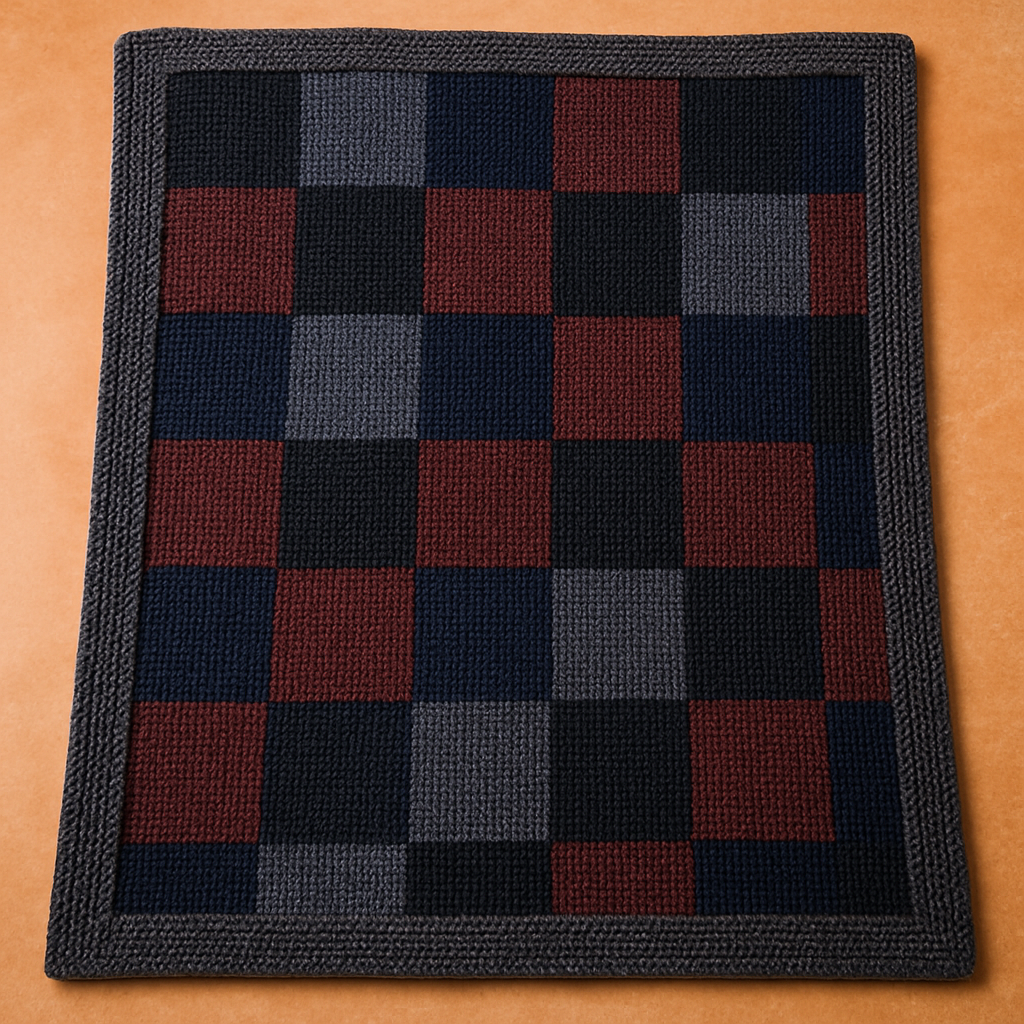
Autumn Ember Leaf Afghan Free Pattern – Knit a Cozy Falling Petals Throw

Embrace Autumn with the Falling Petals Afghan
There's something magical about the transition into autumn—the crisp air, the golden light, and the spectacular show of leaves as they drift to the ground. Now imagine capturing that fleeting beauty in a cozy, handcrafted throw you can snuggle under all season long. The Autumn Ember Leaf Afghan does exactly that, transforming rich amber, rust, and deep brown tones into a stunning, textured landscape of falling petals against a warm cream background.
This isn't just a blanket; it's a statement piece. The clever combination of increases, decreases, and slipped stitches creates dimensional, leaf-like shapes that cascade diagonally across the fabric, giving the afghan a plush, raised texture that's as delightful to touch as it is to behold. Whether you're an experienced knitter looking for a rewarding project or a confident beginner ready for a challenge, this pattern is designed to guide you through every step. Let's dive in and create a family heirloom that celebrates the beauty of the season.
Materials Needed
Before you begin, gather your supplies. This project is all about preparation, so having everything at hand will make the process smooth and enjoyable.
Yarn
You'll need worsted weight yarn in four harmonious colors. The approximate total yardage is 1800 yards, distributed as follows:
- Color A (Cream): For the background, borders, and base of the leaves. (Approx. 800 yds)
- Color B (Amber): A warm, golden yellow for the leaf centers. (Approx. 400 yds)
- Color C (Rust): A rich, burnt orange for the mid-tones. (Approx. 350 yds)
- Color D (Deep Brown): A dark, earthy brown for the leaf edges. (Approx. 250 yds)
Tools
- Knitting Needles: US Size 8 (5.0 mm) — straight or circular, whichever you prefer for a large project.
- Tapestry Needle: For weaving in the ends and finishing.
- Stitch Markers (optional): Helpful for marking the repeat sections in the pattern.
Gauge
To ensure your afghan turns out the correct size, it's crucial to check your gauge first. In stockinette stitch (knit one row, purl one row), you should have 18 stitches and 24 rows = 4 inches. If your gauge is off, adjust your needle size accordingly.
Step-by-Step Instructions
This afghan is knit in one piece from the bottom up. The pattern is built on a repeating 40-row sequence that creates the falling leaf motif. Don't be intimidated by the length of the instructions—once you get into the rhythm of the repeats, it flows beautifully. Let's break it down.
Getting Started: The Foundation
Step 1: With Color A (Cream), cast on 120 stitches loosely. This will be the bottom edge of your afghan.
Creating the Bottom Border
Step 2: Knit 8 rows in garter stitch (knit every stitch across every row). This creates a sturdy, non-curling edge that frames your work beautifully.
The Main Pattern: The Falling Petals
Now for the heart of the project. You will repeat the following 40-row sequence until your afghan measures approximately 60 inches from the cast-on edge. Always end with a Row 40 to complete the pattern repeat.
Note on abbreviations: k = knit, p = purl, k2tog = knit two stitches together (decrease), ssk = slip, slip, knit (decrease), yo = yarn over (increase), sl1 = slip one stitch purlwise.
Rows 1-2: The Cream Base
Row 1 (Right Side): With Color A, knit all stitches.
Row 2 (Wrong Side): With Color A, purl all stitches.
Rows 3-4: Introducing the Slip Stitch Texture
Row 3: Switch to Color B (Amber). Knit 10, *slip 1 stitch purlwise with yarn in back, knit 9*, repeat from * to * until 10 stitches remain, knit 10.
Row 4: With Color B, purl 10, *slip 1 stitch purlwise with yarn in front, purl 9*, repeat from * to * until 10 stitches remain, purl 10.
This slipped stitch creates a subtle, woven texture that will define the leaf's surface.
Rows 5-20: Shaping the Leaf with Increases
This is where the magic happens. The yarn overs (yo) create the increases that widen the leaf, while the k2tog and ssk at the edges shape it. The central knit stitches form the "vein" of the leaf.
Row 5: Switch to Color C (Rust). Knit 5, *k2tog, knit 7, yo, knit 1, yo, knit 7, ssk*, repeat from * to * until 5 stitches remain, knit 5.
Row 6: With Color C, purl all stitches.
Row 7: Switch to Color D (Deep Brown). Knit 5, *k2tog, knit 6, yo, knit 3, yo, knit 6, ssk*, repeat from * to * until 5 stitches remain, knit 5.
Row 8: With Color D, purl all stitches.
Row 9: Switch to Color A. Knit 5, *k2tog, knit 5, yo, knit 5, yo, knit 5, ssk*, repeat from * to * until 5 stitches remain, knit 5.
Row 10: With Color A, purl all stitches.
Row 11: Switch to Color B. Knit 5, *k2tog, knit 4, yo, knit 7, yo, knit 4, ssk*, repeat from * to * until 5 stitches remain, knit 5.
Row 12: With Color B, purl all stitches.
Row 13: Switch to Color C. Knit 5, *k2tog, knit 3, yo, knit 9, yo, knit 3, ssk*, repeat from * to * until 5 stitches remain, knit 5.
Row 14: With Color C, purl all stitches.
Row 15: Switch to Color D. Knit 5, *k2tog, knit 2, yo, knit 11, yo, knit 2, ssk*, repeat from * to * until 5 stitches remain, knit 5.
Row 16: With Color D, purl all stitches.
Row 17: Switch to Color A. Knit 5, *k2tog, knit 1, yo, knit 13, yo, knit 1, ssk*, repeat from * to * until 5 stitches remain, knit 5.
Row 18: With Color A, purl all stitches.
Row 19: Switch to Color B. Knit 5, *k2tog, yo, knit 15, yo, ssk*, repeat from * to * until 5 stitches remain, knit 5.
Row 20: With Color B, purl all stitches.
Rows 21-40: Closing the Leaf with Decreases
Now we reverse the process. The yarn overs stop, and the decreases (k2tog and ssk) begin to narrow the leaf, bringing it to a graceful point.
Row 21: Switch to Color C. Knit 5, *k2tog, knit 17, ssk*, repeat from * to * until 5 stitches remain, knit 5.
Row 22: With Color C, purl all stitches.
Row 23: Switch to Color D. Knit 5, *k2tog, knit 15, ssk*, repeat from * to * until 5 stitches remain, knit 5.
Row 24: With Color D, purl all stitches.
Row 25: Switch to Color A. Knit 5, *k2tog, knit 13, ssk*, repeat from * to * until 5 stitches remain, knit 5.
Row 26: With Color A, purl all stitches.
Row 27: Switch to Color B. Knit 5, *k2tog, knit 11, ssk*, repeat from * to * until 5 stitches remain, knit 5.
Row 28: With Color B, purl all stitches.
Row 29: Switch to Color C. Knit 5, *k2tog, knit 9, ssk*, repeat from * to * until 5 stitches remain, knit 5.
Row 30: With Color C, purl all stitches.
Row 31: Switch to Color D. Knit 5, *k2tog, knit 7, ssk*, repeat from * to * until 5 stitches remain, knit 5.
Row 32: With Color D, purl all stitches.
Row 33: Switch to Color A. Knit 5, *k2tog, knit 5, ssk*, repeat from * to * until 5 stitches remain, knit 5.
Row 34: With Color A, purl all stitches.
Row 35: Switch to Color B. Knit 5, *k2tog, knit 3, ssk*, repeat from * to * until 5 stitches remain, knit 5.
Row 36: With Color B, purl all stitches.
Row 37: Switch to Color C. Knit 5, *k2tog, knit 1, ssk*, repeat from * to * until 5 stitches remain, knit 5.
Row 38: With Color C, purl all stitches.
Row 39: Switch to Color D. Knit 5, *slip 1, k2tog, psso* (pass slipped stitch over), repeat from * to * until 5 stitches remain, knit 5. This dramatic decrease brings the leaf to a sharp point.
Row 40: With Color D, purl all stitches.
Congratulations! You've completed one full leaf motif. Repeat Rows 1-40 until your piece measures 60 inches from the cast-on edge.
Finishing Touches: The Top Border
Step 3: Once your afghan reaches the desired length, switch to Color A and knit 8 rows in garter stitch, mirroring the bottom border.
Binding Off and Weaving In
Step 4: Bind off all stitches loosely in knit. A tight bind-off will pucker the edge, so take your time.
Step 5: Using your tapestry needle, weave in all loose ends carefully, making sure to secure them on the wrong side of the work.
Blocking for Perfection
Step 6: The final step is blocking. This is essential for a project like this. Gently wash your afghan in cool water with a mild wool wash, then lay it flat on a clean towel. Gently stretch it to the correct dimensions (approximately 50 inches wide by 60 inches long) and pin the edges if needed. Allow it to dry completely. Blocking will even out the stitches, open up the leaf motifs, and give your afghan that polished, professional look.
And there you have it—a gorgeous, handcrafted Autumn Ember Leaf Afghan that will bring warmth and rustic charm to any room. This project is a labor of love, but the result is a stunning, textured heirloom you'll be proud to display and snuggle under for years to come. Happy knitting!